

Category: jlreq
Posts
New translation into Chinese
管理中文和日文中的行内空白 (Managing inline spaces in Chinese & Japanese)
Thanks to Fuqiao Xue for providing this translation.
PUBLISHED! Managing inline spaces in Chinese & Japanese
The article Managing inline spaces in Chinese & Japanese looks at ways of using CSS to add gaps between certain types of text, to reduce gaps between punctuation marks, and to manage paragraph-initial spacing. It describes what currently does and doesn’t work.
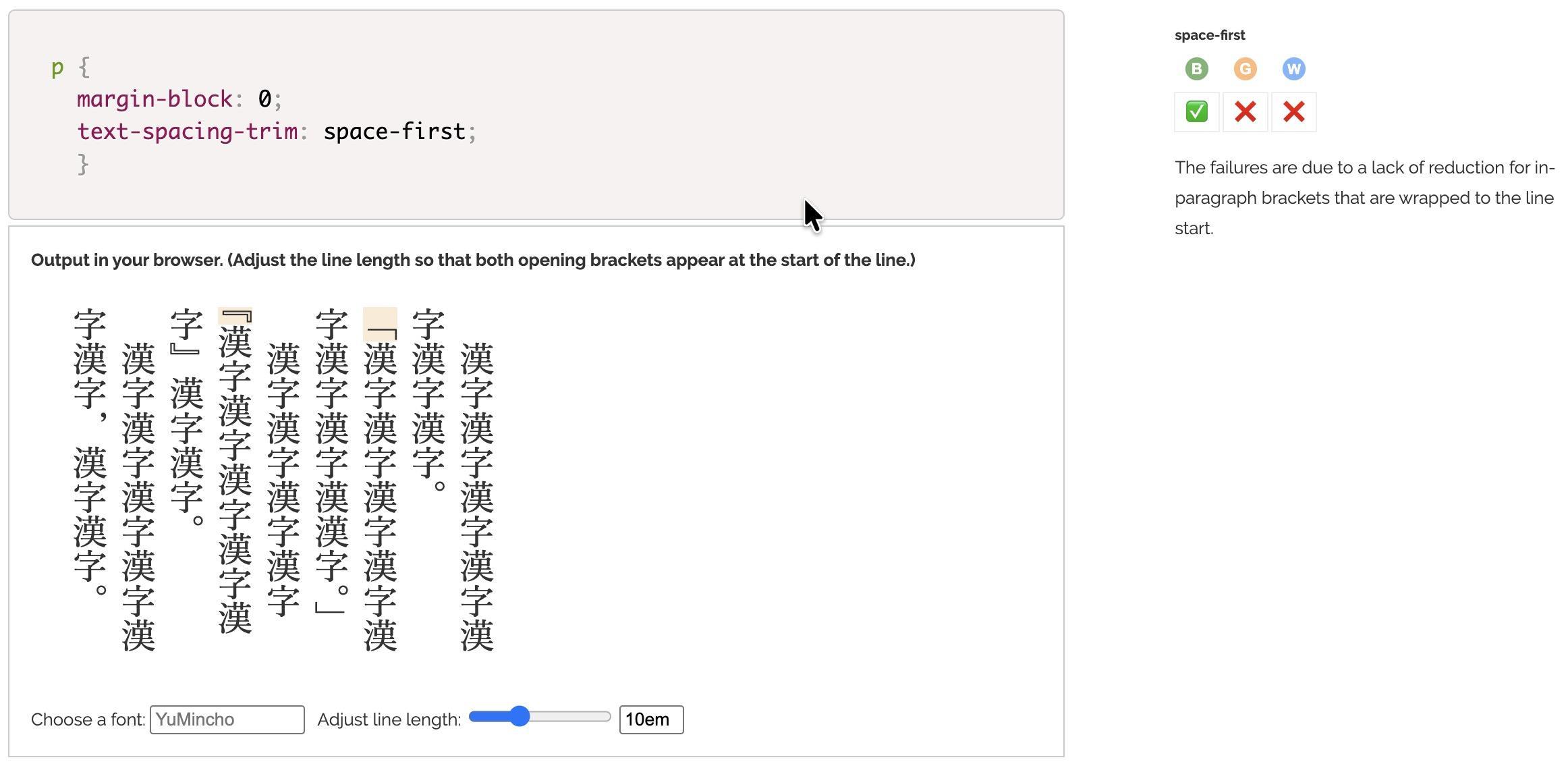
FOR REVIEW: Styling underlines
The article Styling underlines is out for wide review. We are looking for comments by Thursday 19 March, 2026.
This article explores various ways in which CSS can be used to manage underlines for non-Latin scripts.
Please send any comments as GitHub issues by clicking on this link, or on “Leave a comment” at the bottom of the article. (That will add some useful information to your comment.)
New First Public Draft Note: Text-to-Speech Rendering of Electronic Documents Containing Ruby: User Requirements
The Internationalization Activity published Text-to-Speech Rendering of Electronic Documents Containing Ruby: User Requirements as a First Public Draft Note.
This document describes user requirements related to text-to-speech rendering of electronic documents containing ruby annotations. It examines the roles and practices of ruby in different writing systems and discusses the implications of various reading strategies for text-to-speech, without prescribing algorithms or implementation-specific behavior.
Comments welcome, via the GH links indicated at the top of it.
New article: How to make list markers stand upright in vertical text
The article How to make list markers stand upright in vertical text has been published.
In Chinese, Japanese, Korean, and Mongolian vertically-set text it is normal for list counters to sit upright above the start of the list. Until recently this was problematic, because browsers would only show the numbers lying on their side. This article describes how to make them stand upright, and the currently remaining issues to make this look perfect.
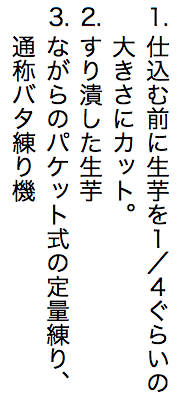
FOR REVIEW: How to make list markers stand upright in vertical text
The article How to make list markers stand upright in vertical text is out for wide review. We are looking for comments by Friday 29 April.
In Chinese, Japanese, Korean, and Mongolian vertically-set text it is normal for list counters to sit upright above the start of the list. Until recently this was problematic, because browsers would only show the numbers lying on their side. This article describes how to make them stand upright, and the currently remaining issues to make this look perfect.
Please send any comments as github issues by clicking on this link, or on “Leave a comment” at the bottom of the article. (That will add some useful information to your comment.)
New First Public Working Drafts: Bengali, Canadian Syllabics, Cherokee, Cyrillic, Devanagari, Ethiopic, Georgian, Greek, Gujarati, Japanese, Javanese, Korean, Mongolian, Osage, Tamil, Tibetan
The Internationalization Activity published the following FPWD documents.
- Bengali Script Resources
- Canadian Syllabics Script Resources
- Cherokee Script Resources
- Cyrillic Script Resources
- Devanagari Script Resources
- Ethiopic Script Resources
- Georgian Script Resources
- Greek Script Resources
- Gujarati Script Resources
- Japanese Script Resources
- Javanese Script Resources
- Korean Script Resources
- Mongolian Script Resources
- Osage Script Resources
- Tamil Script Resources
- Tibetan Script Resources
The documents related to language enablement at the W3C continue and expand the work to reorganise information to represent scripts, rather than individual languages. The newly published -lreq documents should be a first port of call for information related to a given script. They point to descriptions about how the scripts work, to tests, to discussions, to type samples, and more, all organised by topic.
Comments welcome, via the GH links indicated at the top of each page.
WEB I18N GAP FIXED: Interoperable emphasis marks
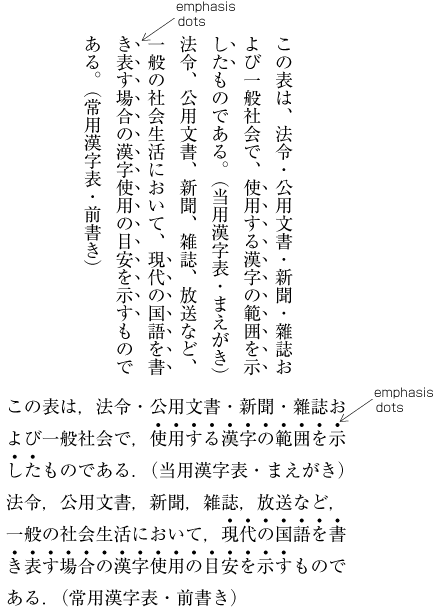
Chinese and Japanese have a native way of indicating emphasis for short ranges of inline text which involves placing a small mark above or below the characters being emphasised in horizontal text, and to the right/left in vertical text.
This is now supported, using CSS, in all 3 major browser engines.
See the Gap report.
See also CSS Text Decoration for how to use this feature.
WEB I18N GAP FIXED: Interoperable custom counter styles
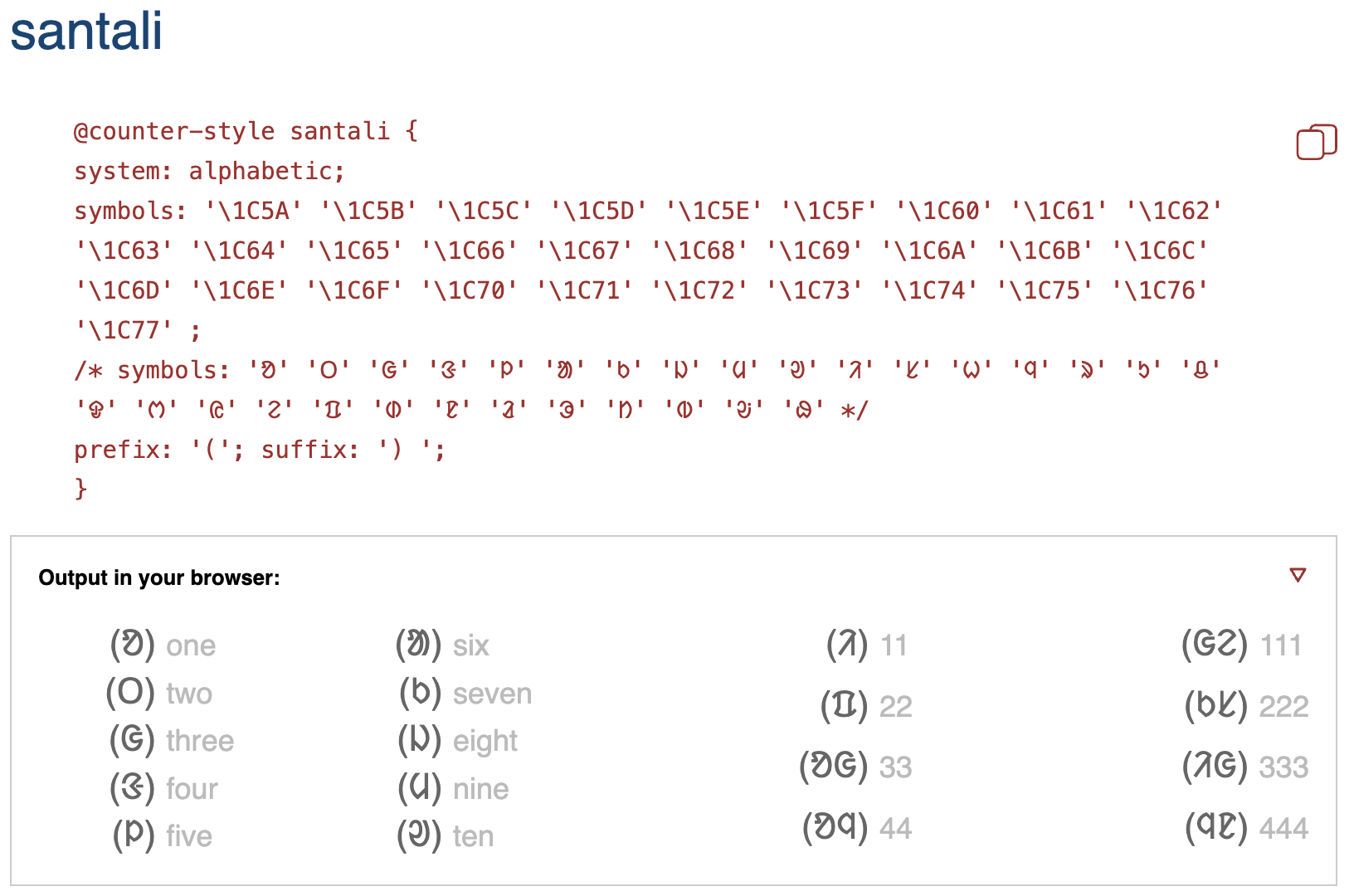
All 3 major browser engines now support the ability to create custom counter styles.
This is a significant step forward in enabling fully interoperable list numbering and other counters that reflect local approaches, especially for languages with smaller speaker populations.
See the Gap report.
See also Ready-made Counter Styles to use or adapt almost 200 suggested patterns from around the world.
WEB I18N GAP FIXED: Upright alphanumerics in vertically-set text
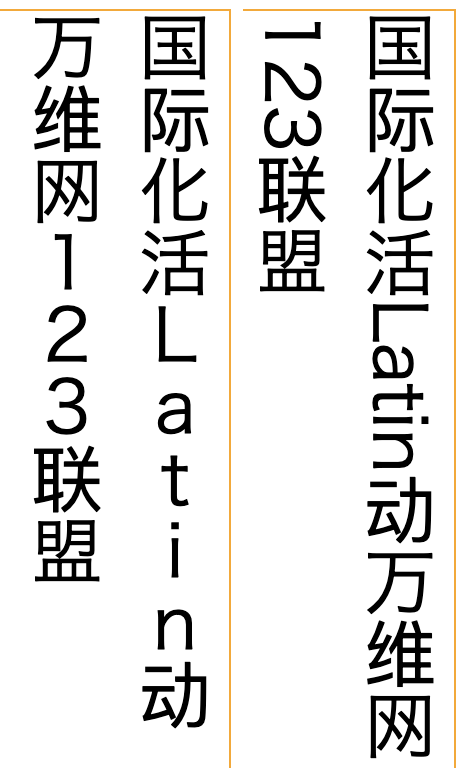
By default, in runs of Latin alphanumeric text the letters are rotated 90º and run down the page. However, in some instances the alphanumerics need to stand upright. For example, this is important for acronyms.
This is now supported, using CSS, in all 3 major browser engines.
See the Gap report.
W3C® liability, trademark and permissive license rules apply.
Questions or comments? xfq@w3.org